AITAS Labs builds autonomous
components from the Heart of Europe.
Our mission is to strengthen and secure the sovereignty of the European defense supply chain of autonomous components for unmanned platforms.
Our mission is to strengthen and secure the sovereignty of the European defense supply chain of autonomous components for unmanned platforms.
Our target is zero Chinese-brand parts across every product. Chinese, Russian, Belarusian, Iranian, and North Korean makers are banned. We check every order against export-control and sanctions rules, and we encourage other companies to do the same.
A European brand does not prove European origin, because some approved makers also run plants in China. We buy only from our Approved Parts List, require country of origin, and reject China-assembled lots. Each serial ships with an origin record.
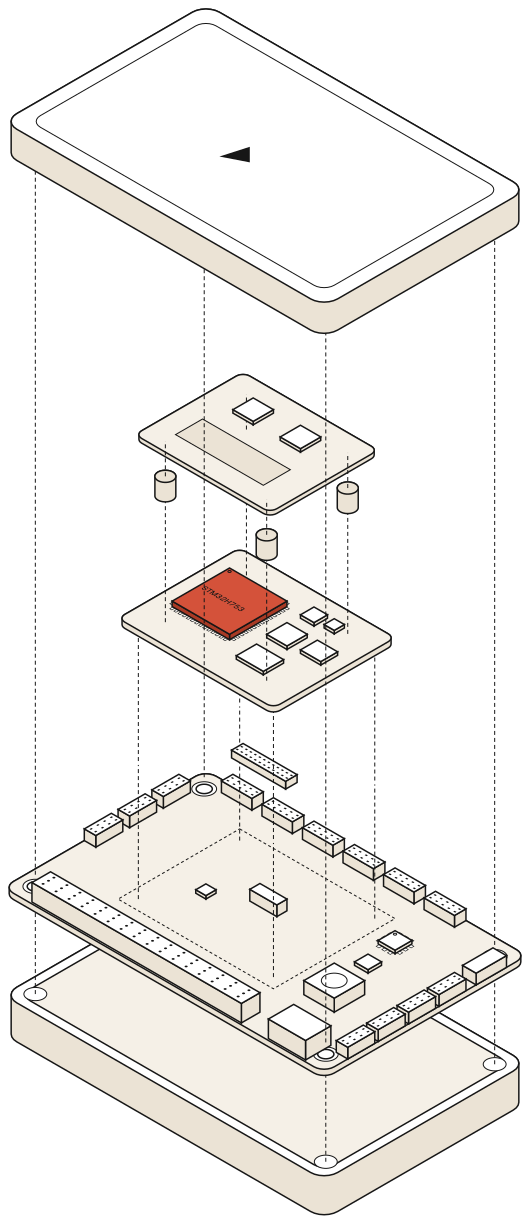
Triple IMU, 16 outputs
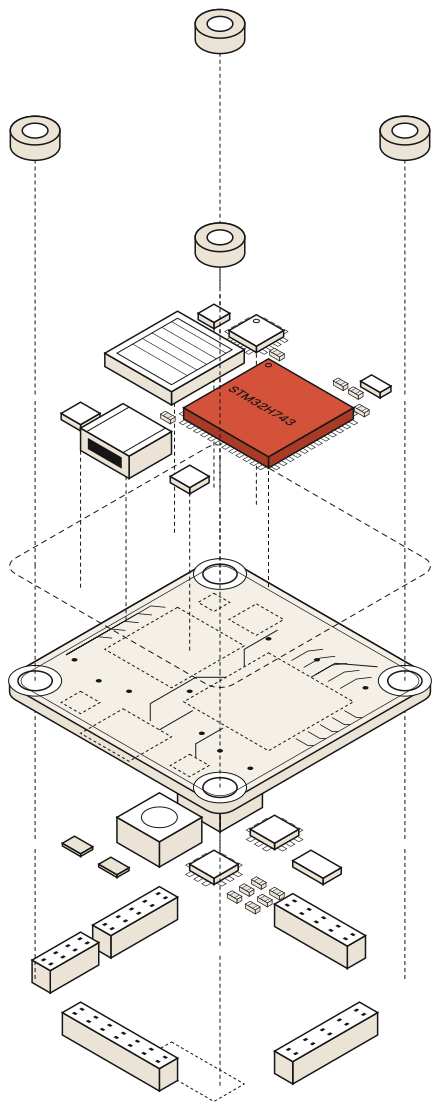
Dual IMU, 12 outputs, 8 UARTs
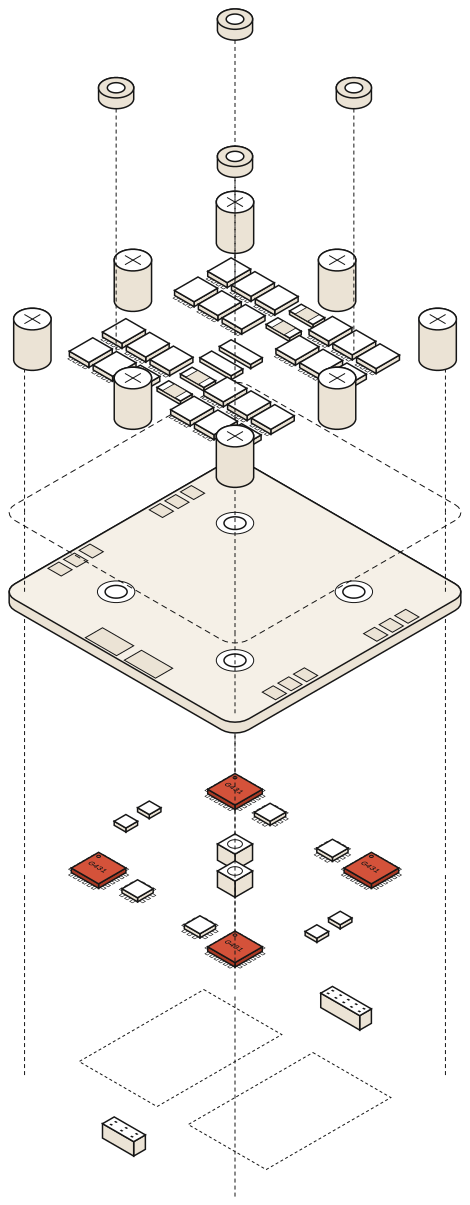
80 A continuous, cooling class D; 100 A for 10 s
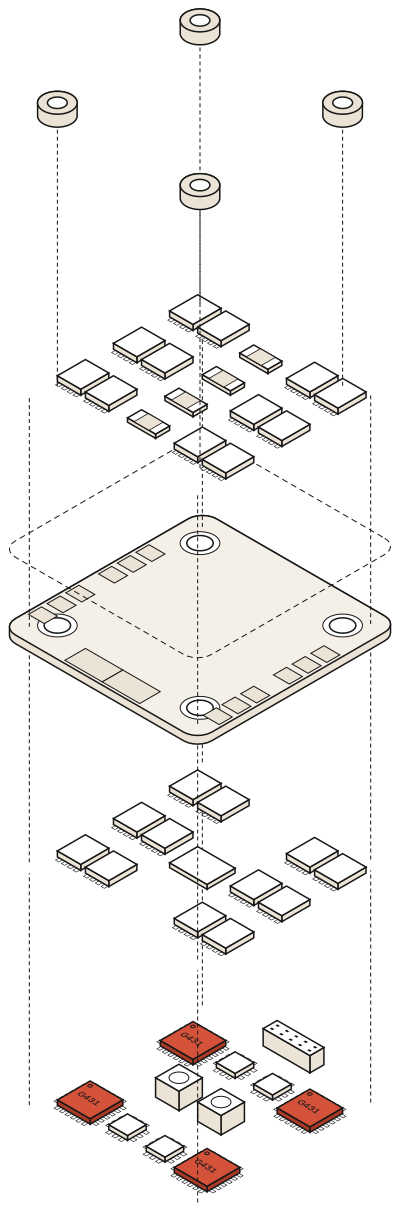
44 A continuous, cooling class C; 60 A burst for 20 s, starting from 25 A
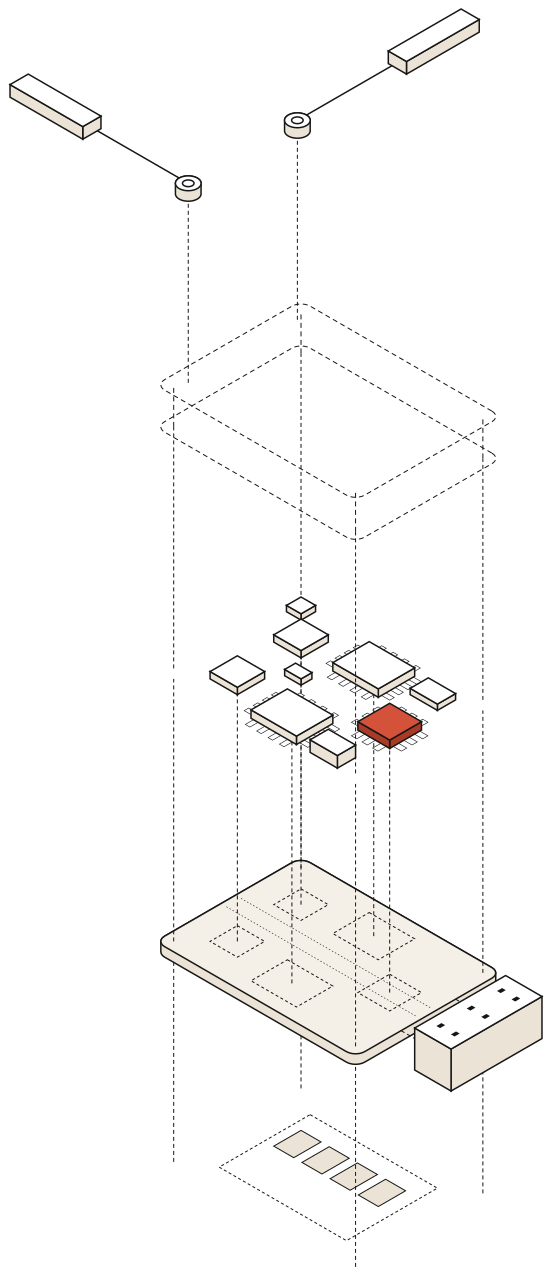
868/915 MHz + 2.4 GHz; two radio chains
Approved parts only, with country of origin declared by lot and an origin record for each serial.
Requirements shaped by team experience on the Middle Eastern and Ukrainian fronts, with a focus on electrical and mechanical robustness.
Spec sheets state operating conditions, cooling classes, and derating. Data sheets with measured results will be published alongside them as we prepare for launch.
Shared connectors, planned firmware targets, firmware loaded at end-of-line test, and per-serial test records.
Autonomous systems are changing how wars are fought, but the hardware behind them still depends on too few suppliers.
Jamming cuts the link between pilot and drone, and autonomy reduces the drone's dependence on that link. NATO and the EU are planning for it, though humans remain accountable for the use of force.
Every autonomous system still runs on hardware: an autopilot, a flight controller, ESCs, and a control link. If those parts stop shipping, the system stops.
engagement success with autonomous navigation, up from 10–20%.
CSIS, 2025
One export-controlled part can stop a production line. Europe's drone supply chain has too many of them.
We start with what we control: board design, manufacturing, testing, firmware, and component origin.
We have partnered with European electronics manufacturing services providers to build our products. Our vision is a sovereign, competitive, and technologically superior arsenal.
of drone components originate in the United States and China.
European Parliament
of military drones used in the EU are supplied by EU producers.
Rabobank
China requires licenses for UAV autopilots, specified high-power motors, and ESCs.
China's Announcement No. 49
We do not claim to match Chinese prices today. But a cheaper board can still cost more if it is held at customs, disqualified by funding rules, or fails in the field.
As volumes grow, our costs should fall, while our origin and performance data stay with every product.
the cost of Chinese equivalents, for some non-Chinese components.
RUSI
in SAFE loans, requiring at least 65% of component value to be European.
SAFE
We design and manufacture systems electronics in Lithuania, using components built by our allies.
Our team has operated on the Middle Eastern and Ukrainian fronts. That experience shapes how we design.
Our components come from EU, NATO, and allied makers on our Approved Parts List.
Every unit will get an end-of-line test, logged by serial number. Our ratings are design targets until engineering validation testing (EVT) of load, thermal, and fault behavior is complete, following test plans based on MIL-STD-810H and MIL-STD-461G.
Firmware support is planned for PX4, ArduPilot, Betaflight, INAV, and AM32. Choose one when you order, and we load it at test. Spec sheets state the cooling class behind every ESC rating.
We are building Europe's sovereign supply chain for autonomous unmanned platforms.
Contact us